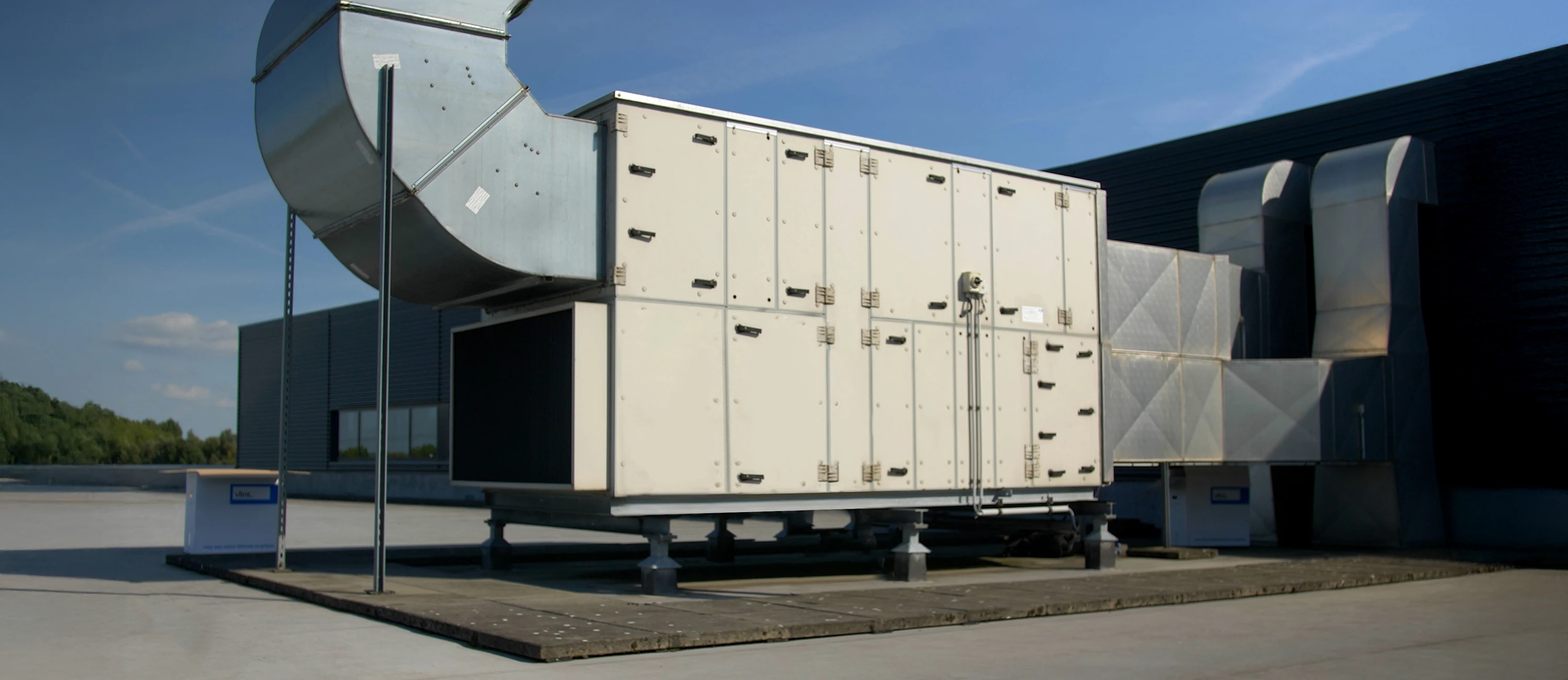
These filters offer lower pressure drop, reduced energy consumption and a longer service life. As a result, you save not only on electricity but also on maintenance and filter replacement costs. In this article, we explain how savings of up to 68.9% are achieved and how a Total Life Cycle Cost (TLCC) calculation can provide insight into your potential cost savings.
How energy-efficient filters reduce energy consumption
Air filters create pressure drop within HVAC systems. The higher the resistance, the harder the fans have to work, resulting in higher energy consumption. Nanowave and Coarsewave filters feature a low initial pressure drop, allowing your system to operate more efficiently without compromising indoor air quality. In short:

Benefits for your installation:
- Up to 68.9% energy savings
- Longer service life (up to 3 years)
- Fewer filter replacements and lower maintenance costs
- Lower Total Life Cycle Cost (TLCC)
- Reduced CO₂ emissions and waste
- Improved indoor air quality
Nanowave fine particle filter for optimal indoor air quality
The Nanowave is an ePM1 fine particulate air filter. It captures ultrafine particles, allergens, bacteria and viruses while maintaining low airflow resistance. It is ideal for offices, healthcare facilities and educational buildings. With a service life of up to 3 years, it reduces replacement costs by 2–3 times. In many cases, the filter pays for itself within its first life cycle.
Coarsewave coarse particle filter for maximum energy savings
The Coarsewave is an ePM10 / ISO Coarse pocket filter designed to capture coarse particles such as dust, dirt, sand and pollen. It is ideal for industrial facilities, warehouses, dusty environments and multi-stage filtration systems.
Total Life Cycle Cost: understand your total savings
Thanks to the long service life of Nanowave and Coarsewave filters, the initial investment is recovered through lower energy consumption, fewer filter replacements and reduced maintenance costs. Using the Total Life Cycle Cost (TLCC) method, we calculate all costs throughout the filter's lifetime, providing a realistic overview of your potential savings rather than focusing solely on the purchase price.
How does the TLCC calculation work?
1. We use official monitoring data, including government air quality stations, to determine local particle concentrations and pollution levels.
2. We analyse the airflow through your air handling unit (AHU) to determine the amount of particulate matter the filter must capture.
3. Based on the filter class, we calculate the percentage of particles captured and the amount of dust the filter can hold before pressure drop increases.
4. We calculate how the filter's pressure drop develops throughout its service life and how this affects fan energy consumption.
5. We combine energy costs, replacement intervals, maintenance and waste disposal costs into one comprehensive calculation to determine your total cost savings.
Want to know how much you can save?
We'll gladly prepare a customised TLCC calculation for your building or project. You'll receive a clear overview of your energy consumption, operating costs, filter lifespan and total savings potential. Interested? Schedule a consultation with one of our specialists to discuss the opportunities for your specific application.
Frequently Asked Questions About Energy-Efficient Filters
Ordering Filters
- How quickly the filter pressure drop increases throughout its service life
- The impact on energy consumption in kWh
- The resulting energy savings, maintenance savings, and total life cycle costs
Savings and ROI
Sustainability
- Fewer service visits and transport movements
- Reduced production of new filters (saving raw materials)
- Less waste and waste processing
Compatibility
Specifications
- ePM1: Ultrafine particles (<1 μm) = F9 / F8 / F7
- ePM2,5: Fine particles (up to 2.5 μm) = F8 / F7
- ePM10: Coarser particles (up to 10 μm) = M6 / M5
- ISO Coarse: Coarse dust, sand, dirt, pollen = G3 / G4